

Healthcare should
not wait for families. It should find them.
Care that waits cannot prevent complications.
Preventable maternal, newborn and child complications persist because many rural families are reached too late and experience gaps between household, community and facility care. Malawi records 225 maternal deaths per 100,000 live births, more than three times the 2030 global target and 24 neonatal deaths per 1,000 live births, twice the 2030 target under SDG 3.
Health services remain largely facility-centred, fragmented and reactive, requiring families to travel long distances for care. Distance, transport costs, limited health information and weak follow-up mean pregnancies may be identified late, danger signs can go unnoticed and manageable conditions can become life-threatening emergencies.
It is a continuity problem: the health system often waits at the facility while risk begins and decisions are made at home. Rural families need a connected health system that reaches them early, continuously and in time.
WANDIKWEZA'S RESPONSE
What if healthcare could reach families before complications begin?
In Malawi, Wandikweza is showing how households, Community Health Workers, midwives, outreach clinics, health facilities and equipped emergency ambulances can work together, bringing care closer, keeping families connected and ensuring women, newborns, children and adolescents receive respectful care without being left to navigate the health system alone.
Proactive Doorstep Care
Six layers. One connected system. Early. Continuously. In Time.
Proactive Doorstep Care (PDC) is a six-layer, government-integrated care model. It extends preventive, routine and follow-up care from facilities into households while maintaining strong links to clinical and emergency services. It supports continuity of health care from adolescence and before pregnancy through pregnancy, childbirth, the newborn period and a child’s fifth birthday.


Care should not depend on people reaching the health system. The health system should reach people. Early, continuously and in time.
Wandikweza believes healthcare should not depend on families reaching a health facility. Instead, the health system should proactively find families, support them throughout pregnancy and early childhood and connect them to timely routine and emergency care. This belief is the foundation of Proactive Doorstep Care (PDC), a last-mile maternal and child health system designed to bring healthcare closer to where people live.
WHAT HAPPENS WHEN FAMILIES ARE
FOUND EARLY
Reach changes everything
When care reaches people at the household, before complications arise, before the journey to a facility becomes necessary, outcomes change. These numbers reflect what happens when a health system is built to find people where they are, before they need to find it.
%20(1)%20(1)%202.jpg)
of women of reproductive age (15-49
years) with access to modern
contraceptive method
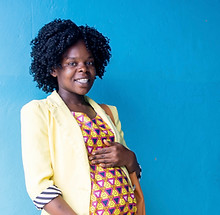
of pregnant women register in their first trimester and receive syphilis testing

of births are attended by a skilled health professional

of children with symptoms of malaria, diarrhea, or pneumonia are assessed within 24 hours

Rooted in Malawi. Built with communities. Designed to stay. Since 2016.
ABOUT WANDIKWEZA
We build Health Systems
Wandikweza, Chichewa for “the Lord has lifted me up” is a Malawian health organisation building last-mile maternal and child health systems through Proactive Doorstep Care.
The model connects households and caregivers with Community Health Workers, Midwives on Wheels, mobile outreach clinics, health facilities and equipped emergency ambulances reaching families early, supporting them continuously and connecting them to care in time.
It is implemented with District Health Offices and government frontline health workers.
WE DO NOT BUILD ALONE
Building Systems
through Partnership
Proactive Doorstep Care does not work in isolation. The government co-owns it. Communities shape it. Funders make it possible. Researchers strengthen its evidence base. Frontline health leaders carry it forward. Each partnership is structural, one that is built into it. Without government co-management, the system has no mandate. Without community trust, it has no reach. Without sustained funding, it has no continuity.
Government Partnership
Integrated with Malawi's Ministry of Health at district level ensuring the system is sustainable, government-owned and aligned with national health strategy.
Global
Funders
Supported by global health funders committed to building last-mile systems that scale, endure and generate evidence that shifts how the sector thinks about rural health delivery.
Research Partners
Academic and research collaborators generating evidence that informs both practice and policy, building a global knowledge base for last-mile maternal and newborn care systems.
Community Leadership
Every district system is designed and operated with communities, from village leadership to CHW networks, because systems that do not belong to communities do not survive them.
See our work
